We Stay, We Learn, We Build.
The last 20 years have been a whirlwind of tenant organizing, growth with growing pains, but most of all —communities coming together. Follow us on Instagram as we post about the history of how tenants of long-established communities came together and the East Bay network of cooperatives made the Bay Area Community Land Trust into what it is today.
The full stories with additional media will live below in our timeline.
Follow us on Instagram to see when new stories are published!
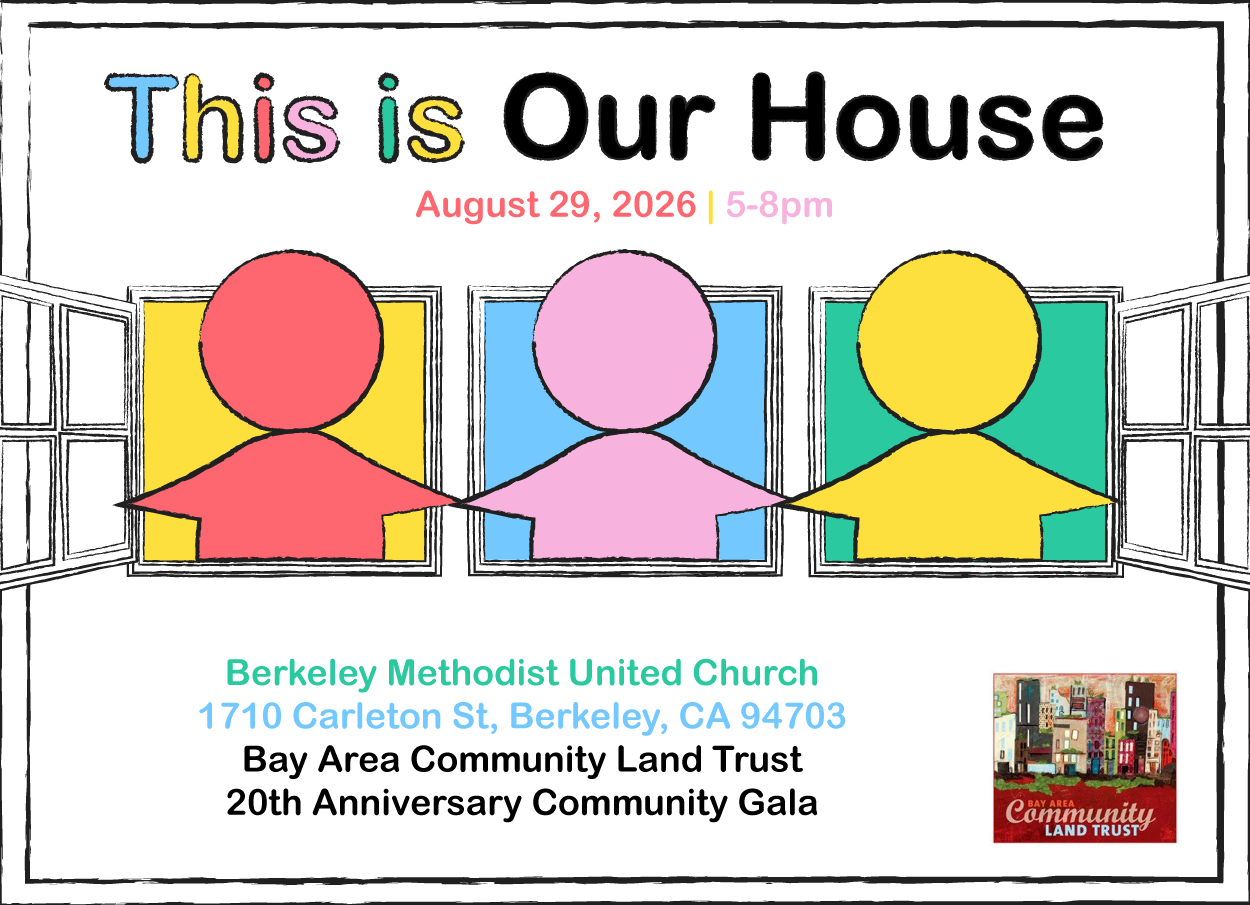
Thank you for celebrating with us!
Our celebration on August 29th was a wonderful gathering, honoring folks that made the organization what it is today, and guests that showed what the past, present, and future holds.
Thank you to our event & table sponsors!
Community Vision
Full Spectrum Labs, East Bay Cohousing, Self-Help Federal Credit Union, Bright Sky Real Estate Solutions, and Michael Wharton
20 Years of Stories
-
The Bay Area Community Land Trust (BACLT) was established in 2006 by a group of older political and union activists in Berkeley to create co-ops for elders to live in community. Kathy Labriola & Rick Lewis conceived the plan and assembled a board consisting of residents from cooperatives and collective housing, union workers, and people with construction experience–including Beth Youhn who remains on the board to this day.
The BACLT board developed an initial multi-generational, “Elder Friendly Co-op” model through community meetings and gained pledges of almost $400,000. Below are pictures from 2006 through 2011 of strategy and public meetings, tours, and more.
After the 2008 foreclosure crisis derailed early progress and lending opportunities, BACLT refocused on more traditional housing co-ops and hired Rick Lewis as director in 2010. He and the volunteer board developed a housing cooperative education program and began looking for co-op opportunities.
The organization’s first successes involved the protection of informal affordable housing created as part of Berkeley’s radical activism in the late 1960s and 1970s, including two properties that were donated. BACLT also hosted public teach-ins, tours, movie screenings, and regular gatherings of local co-ops to build awareness and peer support for housing co-ops in the East Bay.
Stay tuned to learn more about BACLT’s first properties, the cooperative network, and housing preservation advocacy that developed across the East Bay!
-
The transfer of title of Derby Walker House Cooperative to the Bay Area Community Land Trust is the realization of a commitment made more than 40 years ago. In the late 1960’s, this three-unit house sat in a vibrant community between Berkeley’s Derby and Walker Street. Neighbors were civically engaged and had strong social ties – sharing childcare, bulk groceries, volleyball tournaments, potlucks, an annual block party, and published a newsletter called The Daily Walker. One resident reflects, “It was the most wonderful neighborhood and the most wonderful community spirit that I have ever experienced.”
When the building went up for sale in 1971, the neighbors joined the growing movement against absentee landlords by collectively buying and preserving the housing to keep it affordable and for the community. Spearheaded by neighbors Doug and Gale Brown, fourteen people chipped in various amounts to pay the down payment.
In 2010, Derby Walker House offered to donate their property to the Bay Area Community Land Trust in order to formalize their role as a co-operatively owned property, and to preserve affordable housing. A lawsuit was brought by the children of one of the original donors, claiming to be partial owners. This delayed the donation of the property for over three years, and finally that partial owner was bought out by the daughter of one of the original donors. The son of one of the original residents still lives there. A resident reflects, “it’s a cautionary tale because anyone else trying to form a cooperative needs to take all of the necessary legal steps.” More about the neighborhood and residents in the mini-documentary by JJNoir on Youtube, linked on our website!
While the property had been community owned for 40 years, there was no legal structure and the residents had no training in how to run resident controlled housing. Beginning in 2010 BACLT provided education to the residents on property maintenance, finances, conducting meetings and other skills. This process was suspended when it became clear the lawsuit would take longer to resolve and resumed after the property transfer. BACLT used this opportunity to develop its training curriculum that was used and updated with future properties.
When the lawsuit was finally settled, BACLT worked with Attorney Jesse Palmer to develop Articles, Bylaws & ground lease for a Limited Equity housing Co-op (LEHC).
As part of the process of acquiring the property, BACLT determined there was significant deferred maintenance. They hired a contractor to make the most immediate repairs and developed a capital replacement budget to account for future repairs. This required securing a mortgage from the Institute for Community Economics (ICE) with monthly payments by the co-op.
In 2013, the Derby Walker House donation was completed; the co-op was incorporated, and a Regulatory Agreement was signed with the City of Berkeley which allowed the land trust to reduce property taxes to help keep monthly costs down. The following year BACLT undertook and completed major renovations. Hear about it directly from a former resident and Rick Lewis at their 2013 press conference, linked on our website!
-
The East Bay Cooperative Housing Coalition (EBCHC) was formed out of a roundtable discussion hosted by the California Center for Cooperative Development (CCCD) to share resources and experiences living in resident owned and controlled multi-family properties.
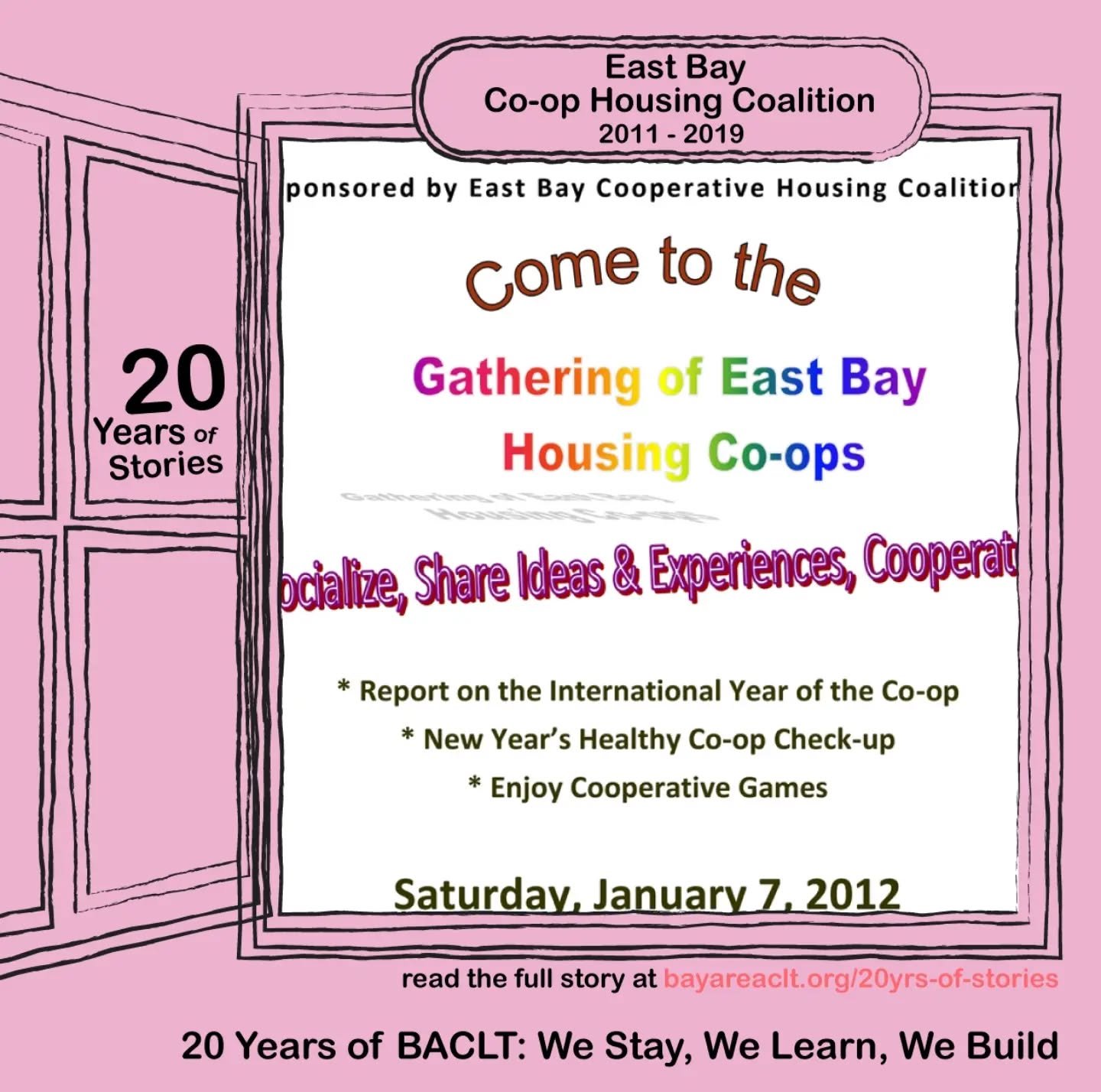
The Bay Area Community Land Trust (BACLT) worked with the California Center for Cooperative Development (CCCD) to support and expand this coalition. On April 9, 2011, this group gathered for the first time. Attendees represented a diverse range of co-op structures, and prioritized discussions, hosting workshops, and advocating for a better regulatory and financial environment for future and existing co-ops.
In the first year, each quarterly meeting brought in on average of 40 people from up to 21 cooperatives. The coalition shared resources related to maintenance, budget, finance, governance, regulations, communication, culture, and sustainability. They shared stories about each of their model’s strengths and shortcomings, and incorporated potlucks, cooperative games, and clothing swaps. The structure of meetings alternated between round table discussions, one-by-one share-outs, panels, and workshops with lawyers and other professionals. Many of these resources were built into coopnetwork.net (no longer active), a site dedicated to sharing information about East Bay cooperatives, contractor referrals, and other resources within its goals
EBCHC met for the last time in this form in 2019 at Oregon Park, a senior cooperative. COVID-19 pandemic and BACLT prioritizing supporting their own properties brought a lull in meetings, but in August 2024, staff decided to re-vitalise the housing cooperative network with a potluck at Strawberry Creek Park. In 2025, two meetings were hosted at Fort Awesome and HiP House (Berkeley Student Cooperatives).
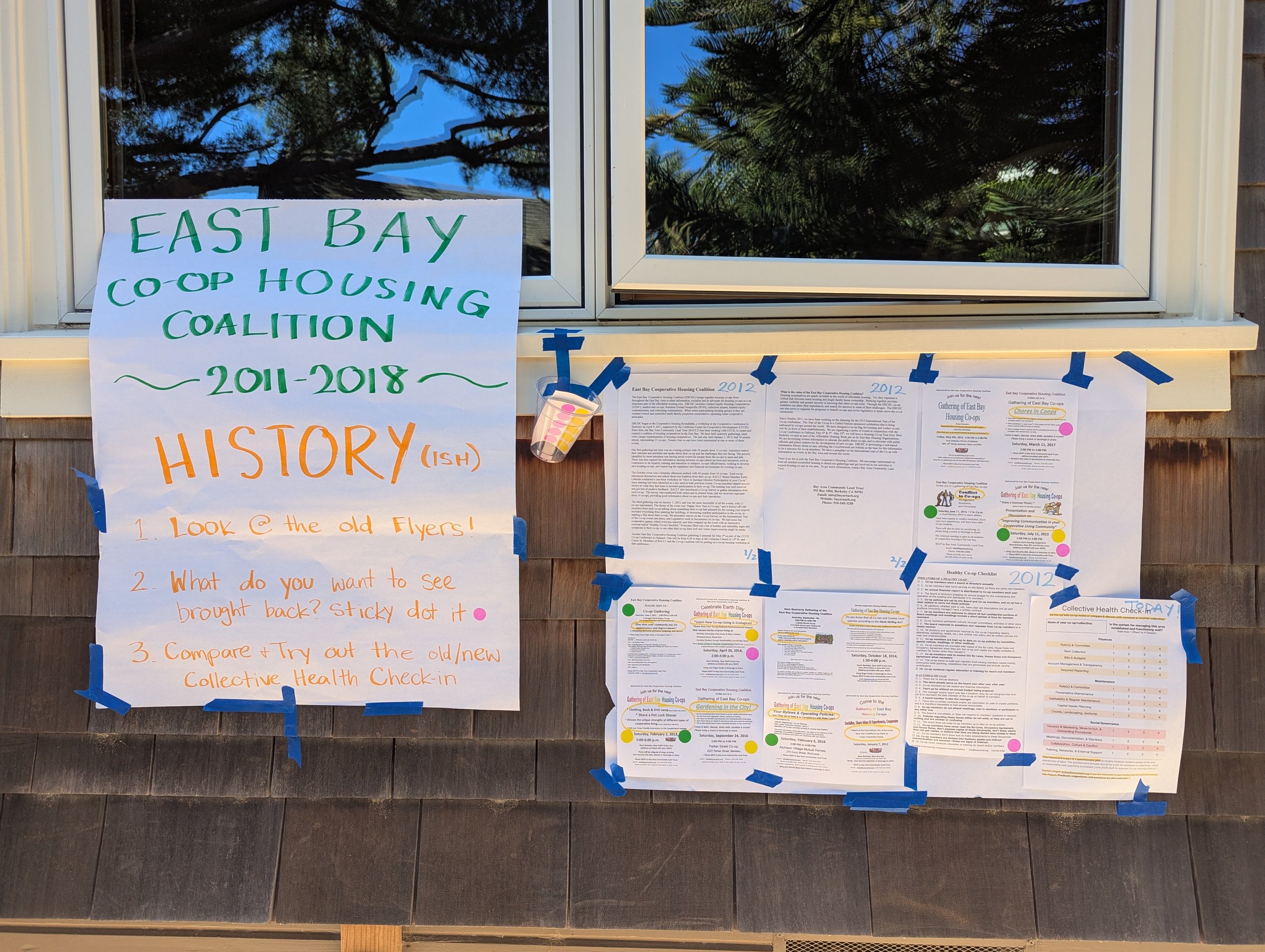
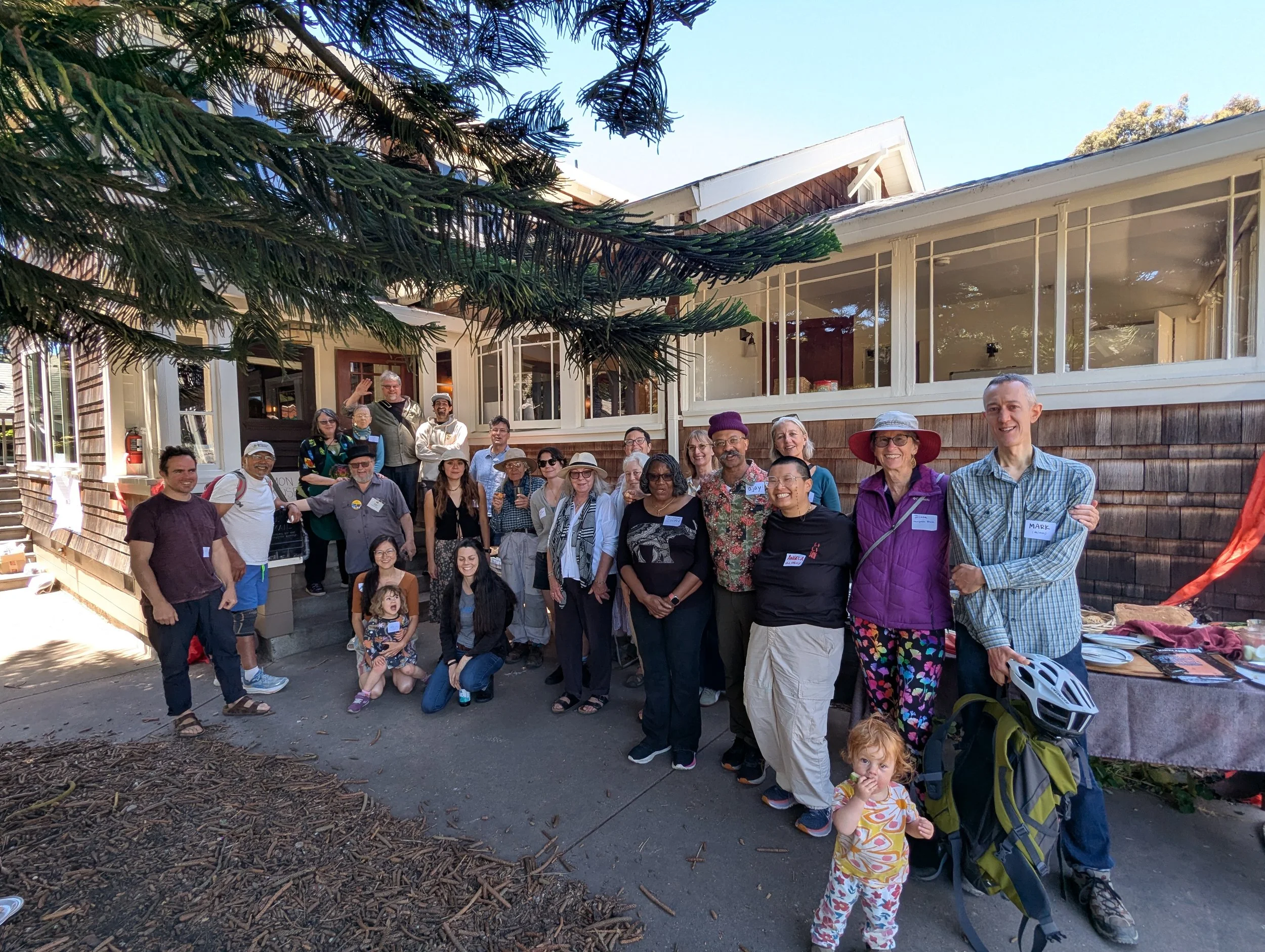
At this year’s potluck on June 27, 2026 hosted by Berkeley Cohousing, roughly 30 people representing 15 housing collectives attended. BACLT shared old flyers, invited folks into discussion, and to map their co-ops (pictured). Attendees toured next-door at The Courtyard, a 23-unit complex where residents have been organizing since Spring 2026 to save their property from being sold to speculators. After, people circled up inside Berkeley Cohousing’s Common House to learn about their history and ask questions. Community members left excited to have more discussions, learn from each other, and bring back resources to their own collectives.
Housing cooperatives represent a critical link between rental housing and single family home ownership. Working together continues to provide greater visibility and security in resource sharing!
Walk through the archives
-
![]()
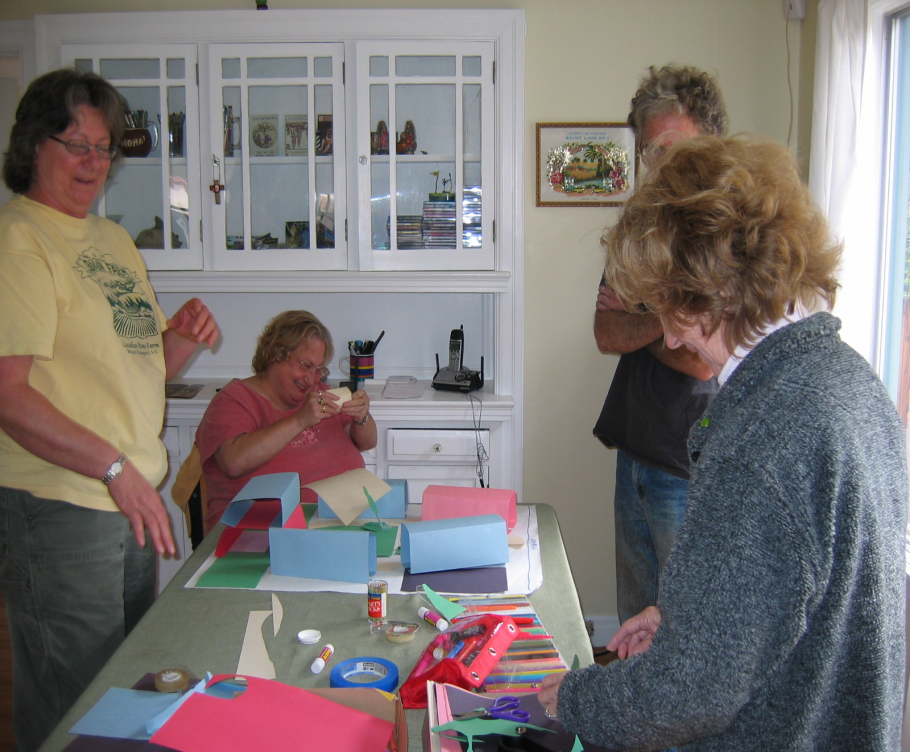
co-op model design charette
2006 — Founding & Origins
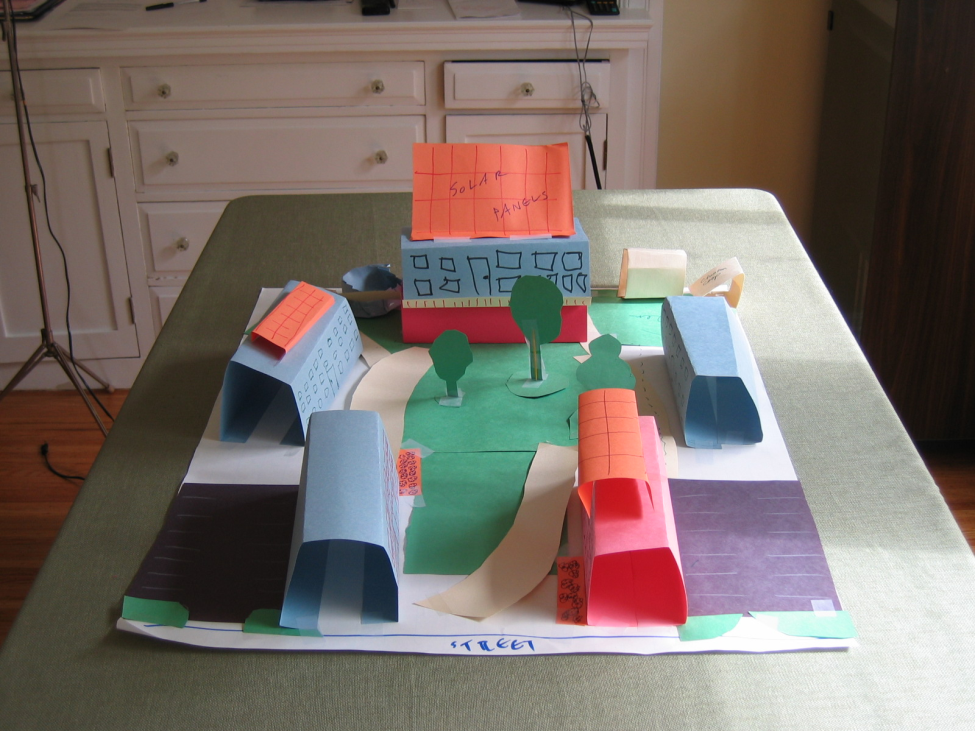
Picture of members brainstorming the elder-friendly co-op model with construction paper
-
![]()
design charette paper model
2006 — Founding & Origins
-
![]()
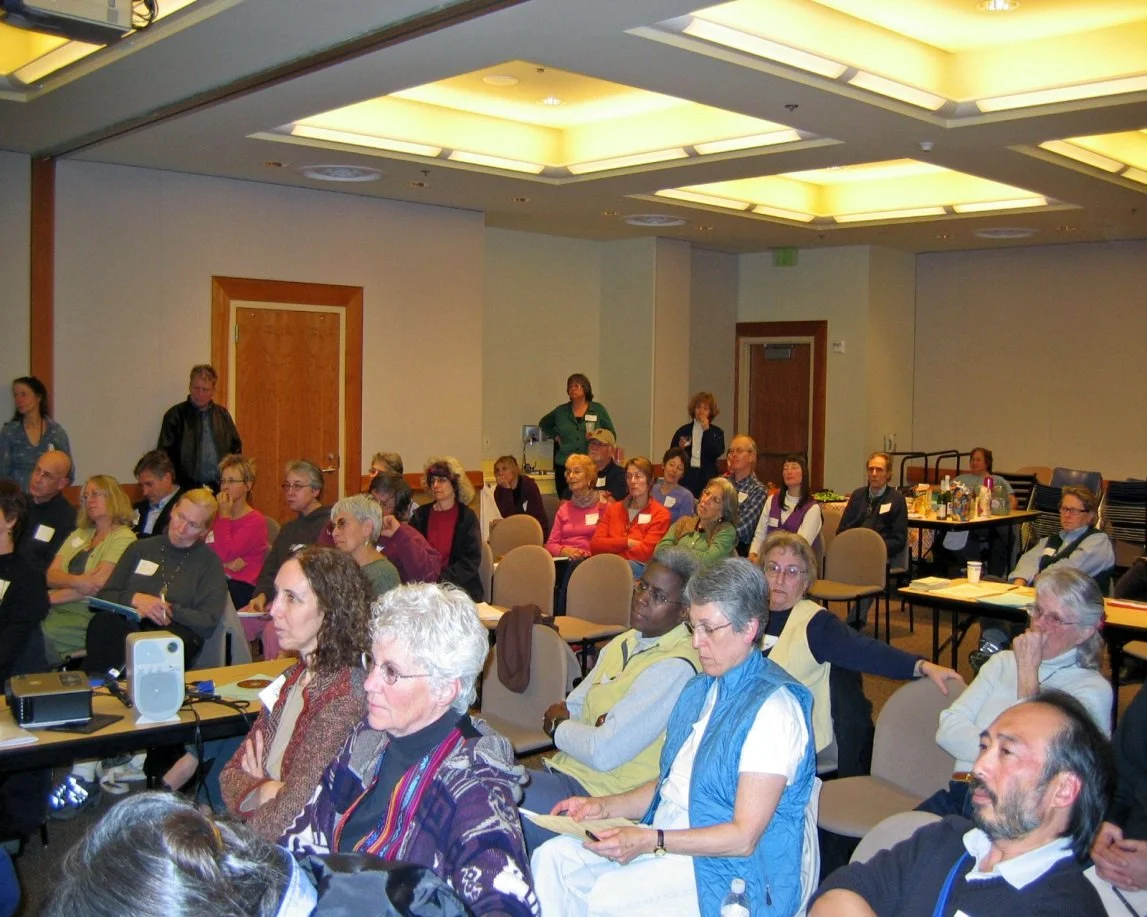
BACLT public meeting
2007 — Founding & Origins
BACLT holds a public meeting January 2007 to share their vision for cooperative housing.
-
![]()
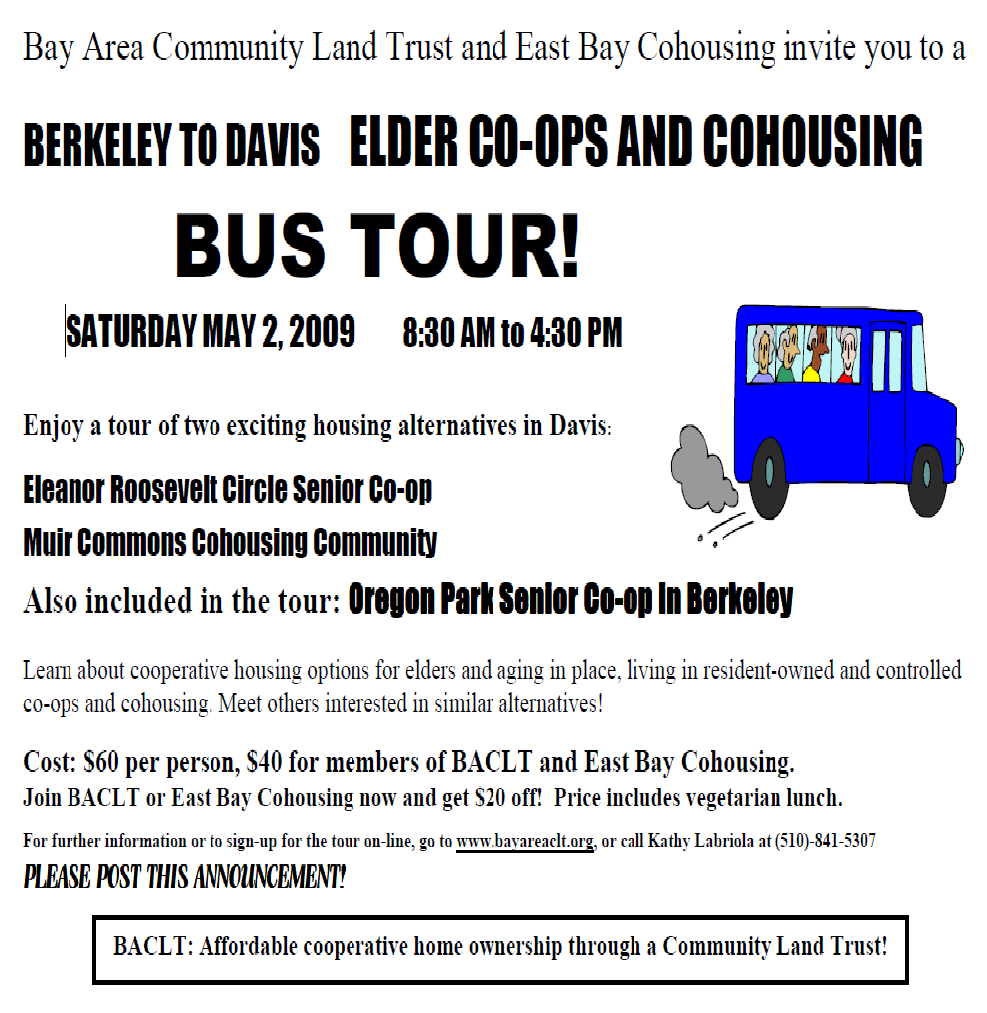
bus tour flyer
2009 — Founding & Origins
Flyer for a bus tour in Davis, CA to see elder housing.
-
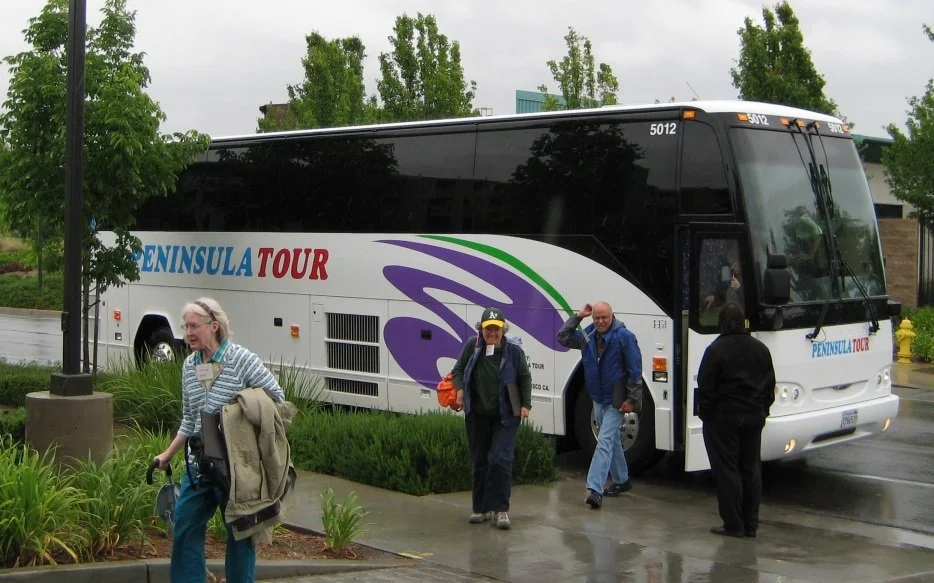
![people exiting a tour bus on a co-op tour]()
bus tour
2009 — Founding & Origins
People hopping off the bus for the tour!
-
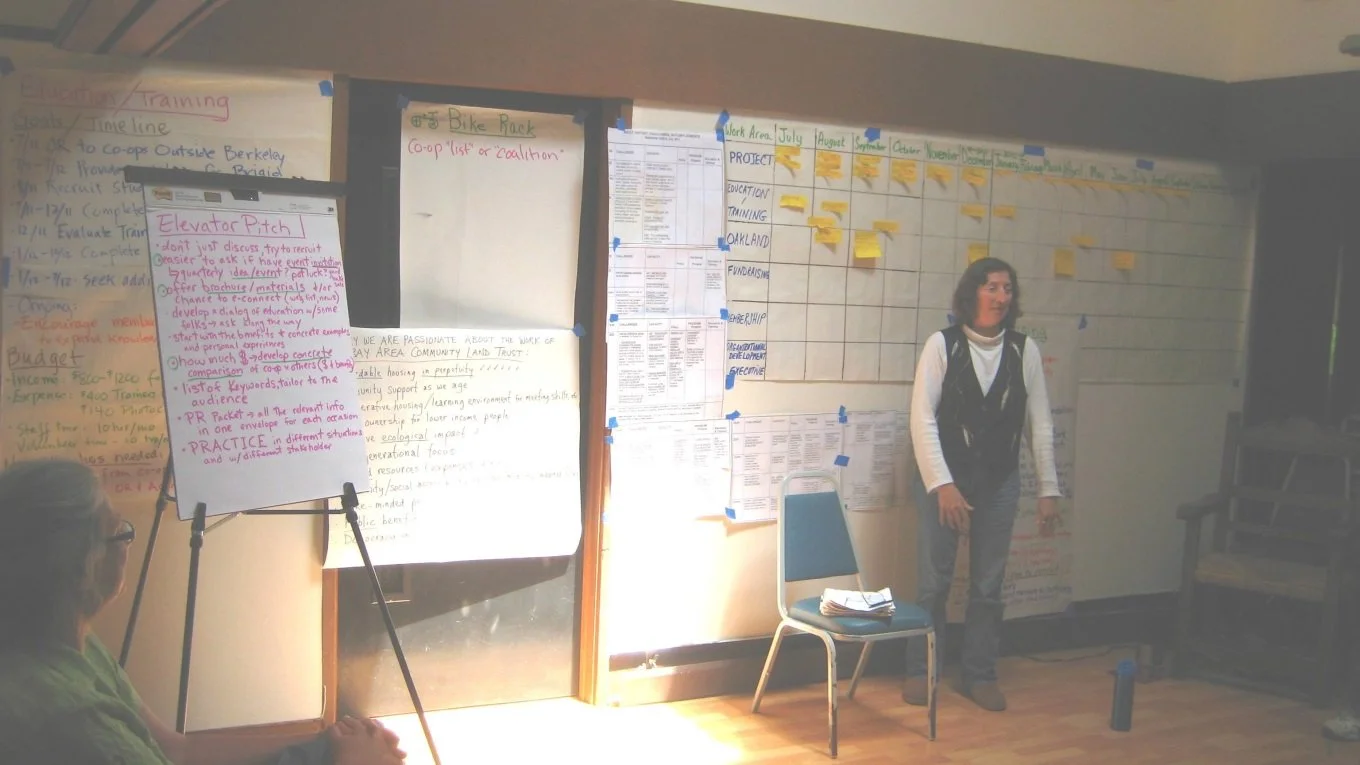
![]()
getting serious with planning
2011 — Founding & Origins
As the co-op education model developed and acquisitions became realized, BACLT’s volunteer board organized to meet the need.
-
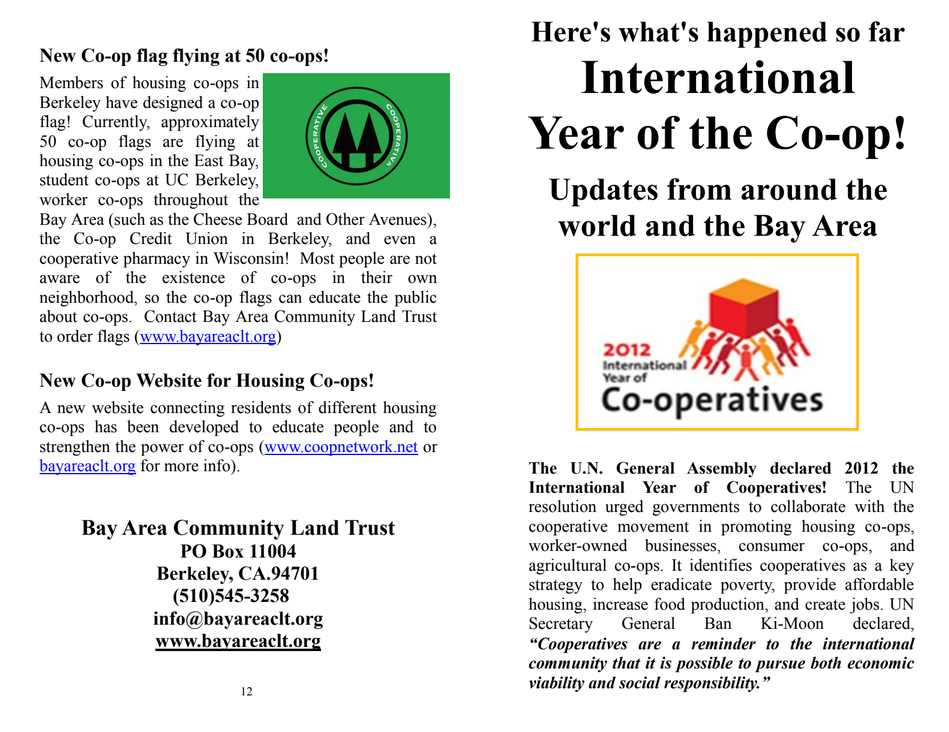
![]()
International Year of the Co-op brochure
2012 — EBCHC
BACLT released a brochure to the coalition on what folks were doing internationally to celebrate co-ops.
-
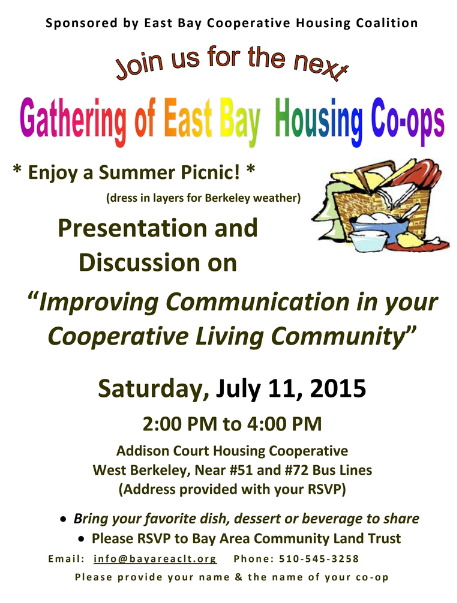
![]()
EBCHC Flyer
2015 — EBCHC
A 2015 flyer advertising a gathering to discuss communication in co-ops.
-
![]()
dot voting for topics
2026 — EBCHC
People dot-voted on discussions to bring back for future events.
-
![]()
group photo at Berkeley Cohousing
2026 — EBCHC
Group photo at the 2026 potluck.